

In global logistics operations, where cargo transportation and customs clearance are becoming increasingly complex, ensuring the safe and smooth arrival of goods at their destination relies on various trade documents. The packing list, as an indispensable document, plays a crucial role in the transportation and customs clearance process. This guide will explain in detail what a packing list is and help you understand its correct use.
What is a Packing List?
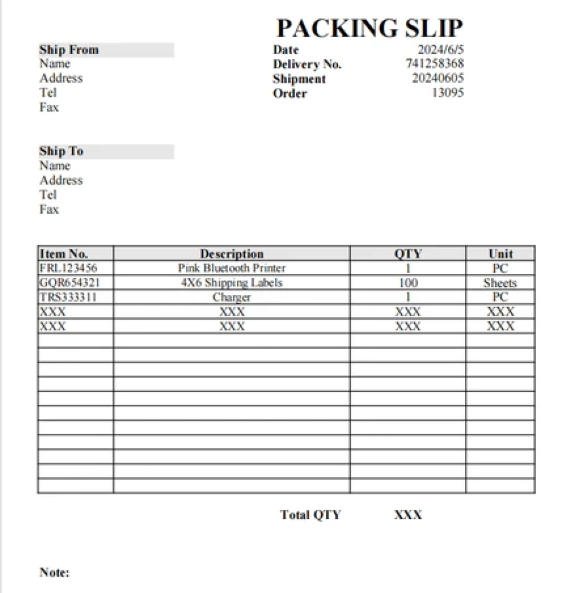
A packing list (also known as a shipping packing list, packing certificate, or container packing list) is a common supporting document in international trade, primarily used to detail specific information about the goods during transportation. It is usually provided by the seller or exporter and contains detailed data about the packaging, quantity, type of goods, and how the goods are loaded.
It provides essential information not only to the seller and buyer but also to customs, transportation companies, and other relevant parties throughout the entire transportation chain.
| Type of packing list | Main purpose | When is it used? | Direct benefits |
|---|---|---|---|
| Export manifest | List goods shipped abroad | International shipments, together with the commercial invoice and customs documents | Facilitates customs inspections, reduces checking errors and ensures transparency |
| Import manifest | Detail goods received from abroad | Entry of cargo into the country and customs clearance processes | Speeds up item checking, avoids tax discrepancies and ensures traceability |
| Break-bulk cargo manifest | Organize goods from different customers into a single load | National distribution with cargo consolidation | Reduces the risk of incorrect deliveries and improves efficiency in separating volumes |
| Return packing list | Register goods returned to the supplier or exporter | Return processes in national or international operations | Avoids inconsistencies, correctly documents items, and supports audits |
The role and importance of packing lists in international shipping
While a packing list is not a legal document issued by carriers or government agencies, it plays a central role in the international freight process as a professional document:
Core tool for cargo handover and verification
The packing list provides clear standards for cargo delivery for both buyers and sellers.
Necessary document for customs clearance
The packing list provides detailed information about the goods, allowing customs to determine tariff rates and check compliance with import and export restrictions.
Reduces disputes and conflicts
Provides effective evidence in case of disputes during transportation.
Ensures proper handling and packaging
Includes important details such as packaging methods, gross weight, and net weight, which facilitates safe loading, unloading, and warehousing.
What information about the goods is included in a packing list?
- Customs Code: Sometimes, the customs code (such as the HS code) related to the goods is also indicated to facilitate customs classification and tax processing.
- Cargo Markings: If the goods have special markings or symbols (such as fragile item labels, hazardous materials symbols, etc.), these should also be clearly indicated on the packing list. Any special instructions or key reference numbers: including purchase order number, batch code, or handling instructions
- Exporter and importer (consignee) names: used to identify the parties involved in the international transaction
- Shipping date and port of destination: crucial for arranging and coordinating delivery
- Goods description: clear product name, SKU, or serial number for customs verification
- Quantity, unit price, and product code: even without price information, this helps customs estimate value
- Gross weight and net weight: essential for calculating freight costs and balancing container loads
- Packaging dimensions and quantity: used for container loading and warehouse planning
- Packaging method and type: e.g., cartons, drums, or pallets, for proper handling and storage
How to Properly Fill Out a Packing List?
Properly filling out a packing list is not only an important step in ensuring smooth cargo transportation, but also crucial in avoiding problems during customs clearance and transportation:
Fill in cargo information item by item:
- Cargo Name and Description: Ensure the description is accurate and clear. Provide detailed product descriptions and specifications.
- Quantity: Clearly state the quantity of each item, which can be in pieces, boxes, pallets, etc.
- Weight and Volume: Fill in the net weight and gross weight (including packaging) of each item.
- Packaging Type: Describe the packaging method for each batch of goods, such as “cardboard box,” “wooden crate,” “pallet.”
Use Standard Terminology and Symbols
Ensure the use of industry-recognized terminology, standard units (such as kilograms, cubic meters, etc.), and symbols.
Check Customs Clearance Requirements
According to the customs regulations of the destination country, ensure that the packing list includes all necessary customs information, such as export license number, customs code, etc.
Verification and Confirmation
After completion, be sure to cross-check with the actual goods, shipping order, commercial invoice, and other documents to ensure the information is accurate.
Common Packing List Errors and How to Avoid Them
While packing lists are crucial, they are often treated as secondary in practice, leading to errors that can cause delays, additional costs, and even compliance issues. The most common errors include:
Incomplete or Inconsistent Information: Missing data such as weight, volume, or accurate product descriptions makes inspection difficult and may affect customs clearance.
Unverified Manual Completion: Increases the risk of input errors, discrepancies with invoices, and rework during verification.
Lack of Standardization: Inconsistent packing list formats at each stage of the process make inspection difficult, increasing inspection time and the likelihood of errors.
Lack of Integration with Other Documents: Inconsistencies between packing lists, commercial invoices, and tax invoices can lead to questions from authorities and delays in the logistics process.
To avoid these problems, the following measures can be taken:
Implement a digital packing list issuance system to reduce human error.
Develop clear internal standards and define mandatory fields for all operations.
Integrate packing lists into the management system to ensure automatic consistency of information.
Establish a pre-shipment inspection procedure to verify the data in the packing list, invoice, and other shipping documents.
Differences in Packing Lists for Sea and Air Freight
The differences in packing lists between sea and air freight mainly lie in the following aspects:
- Emphasis on balancing volume and weight: Sea freight charges are often calculated based on “chargeable tons,” taking the larger of the volume tonnage and weight tonnage.
- Detailed container information: Container number, seal number, and container type (20-foot, 40-foot, etc.) must be specified.
- Port operation requirements: Loading and unloading ports and transshipment port information are often required.
- Importance of moisture-proof and damage-prevention markings: The marine environment is humid, so moisture-proof packaging needs to be emphasized.
- Extremely high accuracy requirements for weight: Air freight charges are calculated based on actual weight or volumetric weight, whichever is higher.
- Strict volume limitations: Must comply with aircraft cargo compartment size limitations.
- Emergency contact information: Usually requires a 24-hour emergency contact person.
- Stricter safety requirements: Dangerous goods, lithium batteries, etc., have particularly strict labeling and documentation requirements.
This article will help you understand how to ensure the accurate use of packing lists in international trade and improve the smooth flow of goods transportation.