

As a major economy in the Middle East, Kuwait relies heavily on imported goods to meet domestic demand. Whether it’s electronics, machinery, or consumer goods, the vast majority of cross-border trade relies on container shipping for efficient and secure cargo flow. Understanding the basics of container shipping is the first step to ensuring your goods arrive safely at their destination.
Container Shipping from China to Kuwait
Container shipping from China to Kuwait typically uses sea freight, a low-cost and most economical long-distance transport method. Container shipping can not only carry large amounts of cargo but also ensures cargo safety, especially for bulk commodities, industrial equipment, and construction materials.
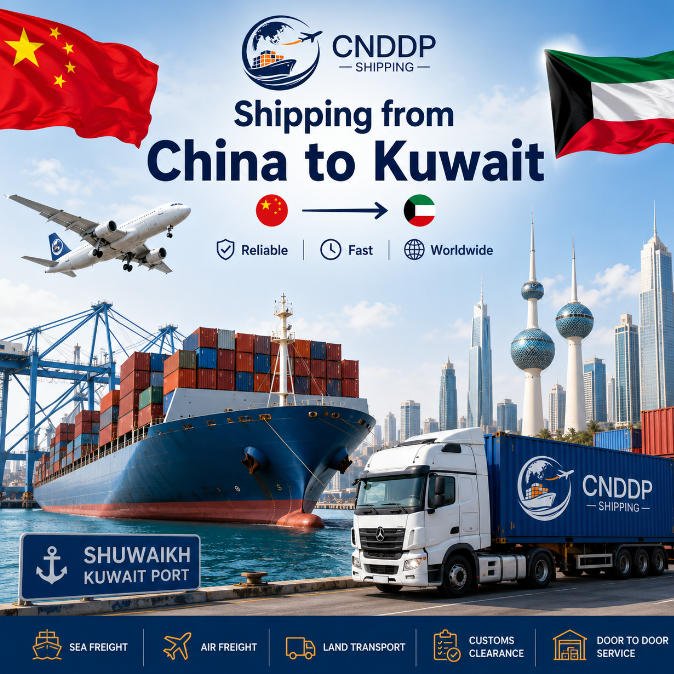
Container Shipping Process
- Loading and Stowage: Containers are typically loaded at the port of departure. At the container port, cargo is stowed appropriately based on cargo type, volume, and weight to ensure safe and efficient transportation.
- Customs Clearance and Export Procedures: Exported goods must complete customs clearance procedures before departing from China. Goods must undergo inspection, review, and obtain an export license.
- Navigation and Transportation: After loading from the port, the cargo undergoes a lengthy sea voyage, transiting through multiple sea areas and subject to weather and sea conditions.
- Customs Clearance and Unloading at the Port of Destination: Upon arrival at the Kuwaiti port, customs clearance must be completed at the destination customs office. Tax rates and customs clearance requirements may vary depending on the type and value of the cargo.
- Final delivery: After customs clearance, the goods will be transported by truck to the final destination in Kuwait.
Comparative Analysis of 20ft and 40ft Containers
Containers are one of the most commonly used means of transportation. 20ft and 40ft containers are the two most common sizes, each offering distinct advantages and application scenarios:
| Project | 20ft Container | 40ft Container |
| External Dimensions | 6.06m × 2.44m × 2.59m | 12.19m × 2.44m × 2.59m |
| Volume | 33 cubic meters | 67 cubic meters |
| Maximum Load | Approximately 28 tons | Approximately 28 tons |
| Suitable Cargo | Heavy, Small | Large, Light, or Medium |
| Advantages | Lower cost, suitable for small quantities | Large capacity, low unit transportation cost |
20ft & 40ft Container Shipping Cost from China to Kuwait
The costs and expenses associated with container shipping involve multiple stages, from loading to delivery at the final destination. These costs can generally be categorized into the following main components:
- Freight Cost: The most direct and significant cost associated with container shipping. Freight costs are typically calculated based on the weight, volume, and distance of the cargo.
- Port Charges: Port charges are fees incurred during the loading and unloading process at the port, including loading, unloading, berthing, and storage.
- Customs Clearance Fees: These are fees associated with customs inspection and declaration during the export and import processes.
- Insurance Cost: Insurance is paid to protect against risks associated with shipping (such as loss, theft, and damage).
The following are container charges between major ports:
| Departure Port | Arrival Port | 20ft Container (USD) | 40ft Container (USD) |
|---|---|---|---|
| Shanghai | Kuwait | $1,300–$3,000 | $1800-$4300 |
| Shenzhen | Kuwait | $1450–$2,900 | $1950-$4200 |
| Ningbo | Kuwait | $1300–$2,850 | $1800-$4140 |
| Qingdao | Kuwait | $1450–$3,000 | $1750-$4200 |
| Hongkong | Kuwait | $1380–$3,050 | $1680-$4250 |
How to Save on Container Shipping Costs
To save on container shipping costs from China to Kuwait, you can optimize and reduce costs by:
Choosing the Right Port
Different ports have different fee structures, so choosing a port with lower fees can help you save.
Maximizing Container Loading
Using appropriate packaging materials and methods, and planning cargo packing effectively, ensures maximum container loading efficiency.
Planning Shipping Times and Seasons
Shipping costs are often affected by seasonal fluctuations; avoiding peak seasons can save on freight costs.
Choosing the Right Incoterms
Using different Incoterms (such as FOB, CIF, DDP ,EXW, etc.) affects how costs are shared. Choosing the right terms can effectively reduce additional costs.
Establishing a Long-Term Partnership with a Freight Forwarder
Establishing a long-term partnership with a reputable freight forwarder may result in discounts or more competitive quotes.
Container Shipping Risks and Safety Management
Container shipping, as a vital component of global trade, involves long-distance transport, cross-border operations, and various risk factors.
Routes and Time for Container Shipping from China to Kuwait
Container shipping from China to Kuwait typically occurs via sea routes, spanning Asia, the Arabian Peninsula, and the Persian Gulf. The following are common routes:
From Shanghai Port to Kuwait Port
Sea freight departing from Shanghai Port, passing through the Strait of Malacca, into the Arabian Sea and the Persian Gulf, arrives at Kuwait Port in approximately 20-28 days.
From Ningbo Port to Kuwait Port
Mainly handling cargo from East China, cargo departing from Ningbo Port passes through the Strait of Malacca, through the important oil shipping channel, and finally into the Persian Gulf to reach the port. This typically takes approximately 22-30 days.
From Shenzhen Port to Kuwait Port
As one of China’s most important foreign trade ports, Shenzhen Port handles a large volume of container shipping. From Shenzhen Port, cargo departs through the South China Sea, into the Strait of Malacca, into the Arabian Sea, and then through the Strait of Hormuz into the Persian Gulf. This typically takes approximately 20-28 days.
Factors in Choosing a Shipping Route
When choosing a shipping route from China to Kuwait, the following factors should be considered:
- Port Facilities and Shipping Accessibility: Ports like Shanghai, Ningbo, and Shenzhen are often preferred as departure ports due to their comprehensive container loading and unloading facilities and busy shipping routes.
- Cargo Type and Shipping Requirements: For goods with high timeliness requirements (such as electronics and high-value goods), consider routes with shorter shipping times.
- Seasonality and Weather: Ocean freight is susceptible to seasonal factors.
- Cost Factors: Choosing the right route and departure port can also affect shipping costs.
Container Shipping Risks and Safety Management
Container shipping carries certain risks, primarily including:
- Cargo Damage: Collision or humidity changes during transportation can damage cargo.
- Delays: Port congestion, weather conditions, or route adjustments can cause shipping delays.
- Loss or Misshipment: Container misloading, port handling errors, or theft.
- Customs Clearance Issues: Incomplete documentation or cargo violations can result in customs detention.
Risk Management Measures
- Container Integrity Inspection: Before loading cargo, inspect the container for its integrity.
- Container Tracking System: Using GPS positioning systems and container tracking tools, you can monitor the container’s transportation status in real time to ensure cargo safety.
- Avoid Overloading: Ensure that the container’s loading does not exceed the specified maximum weight to avoid overloading that could impact transportation safety.
Transporting 20ft and 40ft containers from China to Kuwait is an essential component of supply chain management. By delving into this article, you can reduce transportation costs while improving the efficiency and safety of your cargo shipments.
If you are interested in the cost of shipping containers from China to other Middle Eastern countries, you can read: