

Trade between China and Iraq has been increasing year by year. Container shipping, as the most commonly used mode of transportation, has become a key link in trade between the two countries. This article will provide an in-depth analysis of container shipping from China to Iraq to help you understand the transportation situation.
Container Shipping from China to Iraq
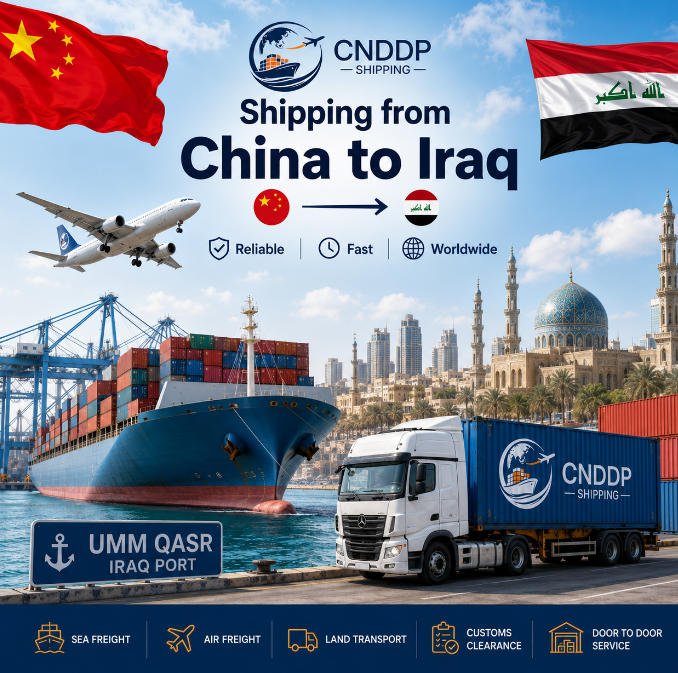
Container shipping from China to Iraq is usually carried out by sea freight. Since Iraq’s main ports are concentrated in the south, goods departing from Chinese ports arrive at Iraqi ports such as Umm Qasr or Basra after several days of voyage. Container shipping enables standardized, bulk, safe, and efficient cargo transportation. 20ft or 40ft containers can:
- Effectively prevent cargo damage and contamination;
- Reduce transportation and handling costs;
- Suitable for various types of goods, such as machinery, building materials, electronic products, textiles, and home appliances.
Container Selection from China to Iraq
When shipping containers from China to Iraq, different goods require different container types to ensure safety, efficiency, and cost-effectiveness during transportation.
Standard containers are the most common type of container and are suitable for most general cargo. They are typically enclosed, rectangular steel structures that effectively protect goods from external environmental influences. They are mainly categorized into 20ft and 40ft containers.
| Type | 20ft Standard Container | 40ft Standard Container |
| Dimensions | Length 6.06 meters, Width 2.44 meters, Height 2.59 meters | Length 12.19 meters, Width 2.44 meters, Height 2.59 meters |
| Load Capacity | 28 tons | 28 tons |
| Volume | 28-30 m³ | 58-60m³ |
| Suitable Goods | Suitable for heavy, small-volume goods | Suitable for most general cargo, suitable for medium to large quantities of goods, |
| Advantages | Small-batch export goods, with relatively low transportation costs. | Hold more cargo, suitable for bulk commodities, building materials, machinery, etc. |
Container Shipping Routes and Times from China to Iraq
Container shipping from China to Iraq is one of the important trade routes in the Middle East. It mainly relies on sea freight, departing from Chinese ports, passing through several transshipment ports, and finally arriving at the port of Umm Qasr in Iraq. The following are the main transportation routes:
Shanghai Port -> Umm Qasr Port
As China’s largest container port, Shanghai Port handles a massive volume of international trade and is a crucial hub for China’s foreign trade. Goods are transshipped through Dubai or Sharjah in the UAE to Umm Qasr Port, taking approximately 25-30 days.
Ningbo Port -> Umm Qasr Port
Cargo from Ningbo Port often transships through Dubai in the UAE or Doha in Qatar. These ports offer fast and efficient transshipment services. The destination port is Umm Qasr Port, a major maritime gateway for Iraq’s foreign trade, taking approximately 30-35 days.
Tianjin Port -> Basra Port
Tianjin Port is the largest port in northern China. Goods are transshipped through Qatar or the UAE, depending on the shipping company’s schedule, to Basra Port, taking approximately 35-40 days.
Transportation time is not only related to the shipping route but also affected by many external factors:
- Port efficiency: Unloading speed, customs clearance efficiency, and transshipment time can vary from port to port. Efficient port handling can reduce container dwell time and shorten the transportation cycle.
- Peak and Off-Peak Seasons: During peak shipping seasons (such as Chinese New Year, European and American holidays, etc.), ports are busy, and transit times may be longer. Avoiding these peak periods can shorten transit times.
- Weather Factors: Extreme weather such as typhoons and storms can affect shipping speed and safety, potentially causing delays.
20ft & 40ft Container Shipping Costs from China to Iraq
Container shipping costs from China to Iraq are influenced by various factors, including cargo type, container type, shipping distance, shipping company, port charges, seasonal variations, and transshipment ports. They typically consist of the following components:
- Ocean Freight: Usually determined based on container type, shipping distance, and shipping company pricing.
- Port Charges: Includes charges at the port of origin and port of destination, such as loading and unloading fees, port usage fees, and port security fees.
- Bunker Adjustment Factor (BAF): Due to fluctuations in oil prices, shipping companies usually charge an additional fuel surcharge based on oil price fluctuations.
- Destination Charges: Destination port charges typically include unloading fees, import clearance fees, and container handling fees.
- Miscellaneous Charges: Miscellaneous charges include cargo insurance, inland transportation costs, warehousing fees, unpacking fees, and transshipment fees.
| Origin (China) | Destination (Iraq) | 20ft Container Cost | 40ft Container Cost |
|---|---|---|---|
| Shanghai | Umm Qasr Port | $1,800 – $3,500 | $2,500 – $4,800 |
| Shanghai | Basra Port | $1,750 – $3,550 | $2,350 – $4,450 |
| Shenzhen | Umm Qasr Port | $1,650 – $3,250 | $2,450 – $5,050 |
| Shenzhen | Basra Port | $1,500 – $3,300 | $2,100 – $4,600 |
| Ningbo | BUmm Qasr Port | $1,650 – $3,350 | $2,150 – $4,850 |
| Ningbo | Basra Port | $1,550 – $3,250 | $2,150 – $4,750 |
| Qingdao | Umm Qasr Port | $1,700 – $3,200 | $2,700 – $4,500 |
| Qingdao | Basra Port | $1,650 – $3,350 | $2,650 – $4,550 |
How to Reduce Container Shipping Costs from China to Iraq
Container shipping costs are a significant component of international trade. To reduce costs while ensuring transportation efficiency and safety, the following strategies can be adopted:
Book in advance
Avoid peak season price increases and ensure sufficient shipping capacity;
Consolidate cargo
Consolidate multiple small shipments into a full container load (FCL), which is more cost-effective than less-than-container load (LCL);
Choose a reputable freight forwarder
Large freight forwarders typically have long-term cooperative rates, offering more favorable and stable rates;
Optimize packaging and loading
Improve space utilization and avoid unnecessary volume;
Use DDP (Delivered to Your Door) service (including taxes and fees)
Reduce customs clearance risks and hidden costs;
Avoid peak holiday seasons
Avoid peak shipping periods such as Chinese New Year and around Ramadan, and plan shipment times accordingly.
This article helps you choose the right container size (20 feet or 40 feet), a reliable freight forwarder, and a reasonable transportation route to reduce costs and ensure safe and timely delivery of your goods.
If you are interested in the cost of shipping containers from China to other Middle Eastern countries, you can read: