

Germany is a core market for Chinese exports, with vast quantities of goods—ranging from electromechanical equipment and home furnishings to auto parts and photovoltaic products—shipped there annually. Full Container Load (FCL) shipping remains the preferred transport method for most foreign trade enterprises; it offers lower costs than air freight and is ideal for large-volume deliveries. However, shipping rates on the Asia-Europe route fluctuate significantly due to factors such as Suez Canal traffic conditions, carrier surcharges, and seasonal inventory cycles. Consequently, when calculating logistics budgets, foreign trade professionals often encounter issues like widely varying quotes and numerous hidden miscellaneous fees.
To successfully manage container shipping from China to Germany, one must not only understand market rate ranges for 20ft and 40ft containers but also be familiar with key aspects such as EU customs regulations, port selection, and container suitability. Below, we provide a comprehensive analysis of FCL shipping solutions from China to Germany, based on the latest market conditions as of August 2026.
Shipping Containers from China to Germany
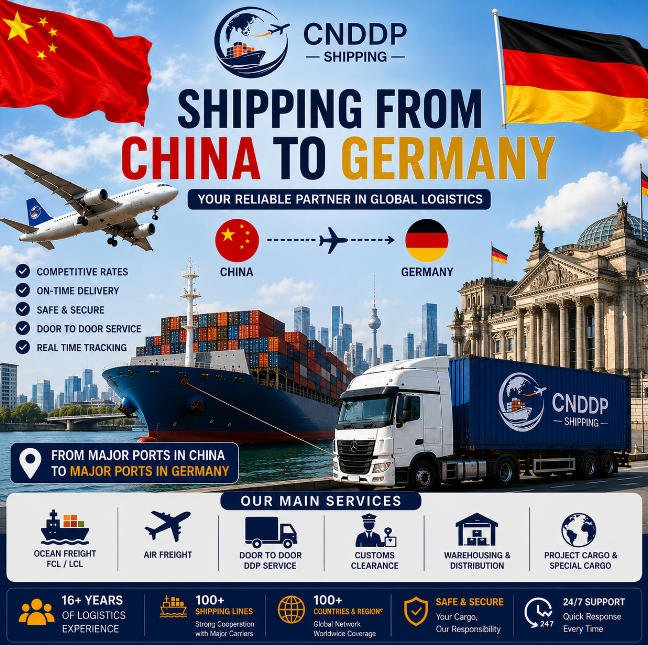
As a core economy within the EU, Germany is one of China’s most important trading partners. Chinese exports to Germany span a wide range of categories, including machinery and equipment, auto parts, home furnishings, building materials, textiles and apparel, photovoltaic products, and consumer goods. The primary container ports in Germany are Hamburg and Bremerhaven. The Port of Hamburg boasts the most extensive shipping network, serving all of Germany as well as Central and Eastern European countries; the Port of Bremerhaven specializes in industrial goods and automotive-related cargo and is another frequently chosen destination for Chinese exports.
CNDDP Shipping specializes in Asia-Europe ocean freight routes, focusing on 20ft and 40ft FCL shipping services from China to Germany. We cover all major Chinese departure ports—including Shanghai, Ningbo, Shenzhen, Guangzhou, and Tianjin—and partner with leading carriers such as MSC, CMA, Maersk, and COSCO.
The main shipping routes from China to Germany transit directly via the Suez Canal, though some carriers opt to route cargo through European transshipment hubs before completing the journey to Germany via inland transport. We are well-versed in EU Entry Summary Declaration (ENS) requirements and German customs regulations. This expertise allows us to effectively mitigate risks such as space shortages, port congestion, and missing compliance documentation, thereby providing export manufacturers and traders with transparent, stable, and comprehensive container shipping solutions for the Asia-Europe route to Germany.
Shipping Container Routes from China to Germany
Choosing a Port for Container Shipping from China to Germany
Port of Hamburg: As Germany’s largest port, Hamburg handles a vast volume of maritime cargo. It maintains long-standing, robust ties with China, with nearly one-third of its cargo either originating from or destined for the Chinese market.
Port of Bremerhaven: A key hub for importing Chinese automotive products, machinery, and electronics. Many German automakers utilize this port to import components from China.
Port of Rotterdam (Netherlands): Although located outside Germany, Rotterdam serves as a vital gateway for goods entering the German market. It also acts as a major transshipment hub for cargo moving between China and Germany.
Container shipping costs from China to Germany
Shipping rates for containers from China to Germany are influenced by factors such as international oil prices, peak-season surcharges imposed by shipping lines, and conditions in the Suez Canal; consequently, there is a significant price difference between peak and off-peak seasons.
The following are reference port-to-port shipping rates provided by CNDDP Shipping, all quoted in US dollars. These quotes cover the base ocean freight from the port of origin in China, fuel surcharges, terminal handling charges, documentation fees, and ENS filing fees; however, they exclude German destination charges such as customs duties, VAT, customs clearance fees, miscellaneous terminal charges, and inland delivery fees. Prices vary considerably depending on the month and the season, and for the same route, the rate for a 40ft container is approximately $500 higher than that for a 20ft container.
| Origin Port | Arrival Port | 20ft Container (USD) | 40ft Container (USD) |
|---|---|---|---|
| Shanghai | Hamburg | $1,500 – $4,150 | $2,000 – $4,650 |
| Shanghai | Bremerhaven | $1,600 – $4,200 | $2,100 – $4,700 |
| Ningbo | Hamburg | $1,850 – $4,050 | $2,250 – $4,550 |
| Ningbo | Bremerhaven | $1,550 – $4,100 | $2,050 – $4,600 |
| Shenzhen | Hamburg | $1,700 – $4,200 | $2,200 – $4,700 |
| Shenzhen | Bremerhaven | $1,750 – $4,250 | $2,250 – $4,750 |
| Guangzhou | Hamburg | $1,650 – $4,150 | $2,150 – $4,650 |
| Guangzhou | Bremerhaven | $1,700 – $4,200 | $2,200 – $4,700 |
| Tianjin | Hamburg | $1,750 – $4,000 | $2,050 – $4,800 |
| Tianjin | Bremerhaven | $1,620 – $4,080 | $2,120 – $5,080 |
Notes:
- Reference LCL (Less than Container Load) rates: $85–$160/CBM;
- The peak shipping season runs from August to December; shipping lines impose a Peak Season Surcharge (PSS), generally raising rates by $200–$400 per container. Long-term partners of CNDDP Shipping may apply for rate locking and guaranteed space;
- Rates for sensitive cargo—such as items containing batteries or magnets, powders, and branded goods—require a separate quote;
- The direct sea transit time from China to Germany is 28–36 days; however, this duration may be extended further due to issues such as Suez Canal congestion or port backlogs.
Cost of Shipping a 20ft Container from China to Germany
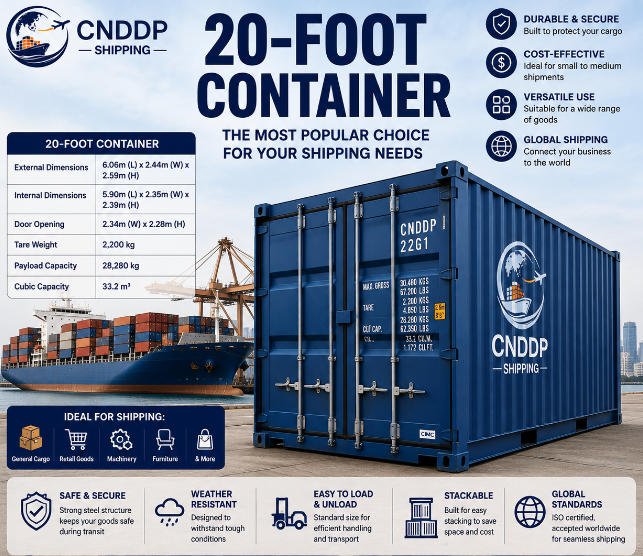
For high-density, heavy cargo such as machinery or raw materials, a 20-foot container is often the best choice. As of early 2026, the cost of shipping a 20-foot container from China to Germany typically ranges from $1,500 to $4,000. Please note that these prices are port-to-port prices and do not include load and unloading charges (THC) at the port of origin or destination.
| 20ft container cost component | Average Cost (USD) |
|---|---|
| Base Shipping Rate | $1,500 – $4,000 |
| Fuel Surcharge | $100 – $200 (Depending on oil price fluctuations) |
| Port Fees | $50 – $150 |
| Customs Duties | $200 – $400 |
| Insurance | $50 – $150 |
Cost of Shipping a 40ft Container from China to Germany
If you are shipping larger cargo such as furniture, textiles, or electronics, the price per cubic meter of a 40-foot container (or 40HC container) is more advantageous. Currently, the cost of shipping a 40-foot container from China to Germany is between $2,000 and $5,000.
| 40ft container cost component | Average Cost (USD) |
|---|---|
| Base Shipping Rate | $2,000 – $5,000 |
| Fuel Surcharge | $100 – $250 (Depending on oil price fluctuations) |
| Port Fees | $100 – $200 |
| Customs Duties | $300 – $500 |
| Insurance | $100 – $200 |
Cost of Shipping a 40HQ Container from China to Germany
A 40HQ (High Cube) container offers one extra foot of vertical space compared to a standard 40-foot container, making it the most cost-effective choice for shipping lightweight, bulky cargo. The average cost of shipping a 40HQ container from China to Germany ranges from $2,200 to $5,500.
| Cost Component | Average Cost (USD) |
|---|---|
| Base Shipping Rate | $2,200 – $5,500 |
| Fuel Surcharge (BAF) | $250 – $400 |
| Origin & Dest Port Fees | $150 – $350 |
| Customs Clearance | $100 – $200 |
| Cargo Insurance | $100 – $150 |
Factors Affecting Container Shipping Costs from China to Germany
Port of Origin and Destination Port
Ports in East China (Shanghai, Ningbo) offer the most abundant resources for the Asia-Europe route, often providing more competitive freight rates. South China ports (Shenzhen, Guangzhou) benefit from concentrated cargo sources and flexible cargo cutoff times, while North China ports (Tianjin) are convenient for nearby factories to ship goods. Among destination ports, Hamburg offers the most frequent sailings and ample capacity; Bremerhaven has slightly fewer sailings and marginally higher costs. Some clients opt to unload at Rotterdam or Antwerp and transport goods to Germany by truck, necessitating a separate calculation for inland freight costs.
Seasonal Trends and International Shipping Market Conditions
The period from January to June is the off-season, characterized by ample capacity and low freight rates. The peak season runs from August to December; import demand surges as European retailers stock up for Christmas, and combined with rising fuel and peak season surcharges, freight rates climb significantly. Conditions in the Suez Canal directly impact costs and transit times for the Asia-Europe route; any congestion can trigger a sharp, short-term spike in freight rates.
Cargo Type and Shipping Mode
Standard general cargo incurs the lowest rates, whereas goods containing batteries, liquids, or powders, as well as goods involving potential trademark infringement, incur additional handling costs. Full Container Load (FCL) shipping offers greater stability and is ideal for large-scale B2B trade. Less than Container Load (LCL) shipping suits smaller shipments or sample restocking, though it entails container devanning fees at the German destination port; a comprehensive quote should be confirmed in advance.
EU Compliance-Related Costs
Exports to the EU require an Entry Summary Declaration (ENS)—a mandatory procedure that incurs a filing fee. Requirements such as CE certification, the appointment of an EU Authorized Representative, and EPR registration—while distinct from ocean freight charges—directly influence the success of customs clearance and are critical factors to consider when exporting to Germany.
Shipping from China to Germany: How to Choose Between 20ft and 40ft Containers
When shipping goods from China to Germany, the type of container used is a key factor influencing shipping costs and efficiency. Different container types are suited to specific types of cargo and transport requirements, with varying prices and operating costs for each. Below are the specifications for the different container types:
| Features | 20ft Container | 40ft Container |
| Size | Length 6.06m x Width 2.44m x Height 2.59m | Length 12.19m x Width 2.44m x Height 2.59m |
| Internal Volume | Approximately 33m³ | Approximately 67m³ |
| Load Capacity | Approximately 28 tons | Approximately 28 tons |
| Suitable Cargo | Small-batch, high-density cargo transportation (such as metal parts, machinery and equipment, and high-density products). | Large, lightweight cargo (such as furniture, plastics, textiles, and tires) |
| Cost-Effectiveness | Ocean freight is generally 30%-50% cheaper than a 40ft container, | The lower cost per unit volume makes it the preferred choice for lightweight and bulky cargo. |
| Flexibility | More suitable for scenarios with unstable cargo volumes or frequent, small-batch shipments | Suitable for large, stable orders, it can reduce the number of shipments |
20ft Container
The 20GP container offers an internal volume of approximately 33 cubic meters and a maximum payload of 28 tonnes, making it ideal for high-density, heavy cargo and small-to-medium batch shipments. It is the preferred choice for heavy goods such as hardware, small machinery, auto parts, ceramic tiles, and metal products.
Advantages: Low entry cost per container; independent full-container transport avoids the risks of damage or cross-inspection associated with LCL (Less than Container Load) consolidation; suitable for small and medium-sized foreign trade enterprises and orders. There is significant demand for heavy cargo imports in the German market, where 20ft containers account for a high proportion of shipments.
40ft GP / 40ft HQ Container
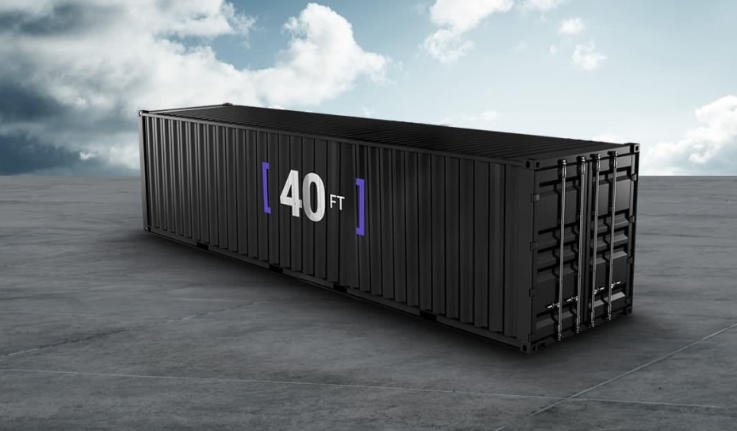
The 40GP container has a volume of 67 cubic meters, while the 40HQ (High Cube) offers 76 cubic meters; both are suitable for large volumes of lightweight, bulky cargo such as textiles and apparel, furniture and home appliances, consumer goods, photovoltaic modules, and large-scale e-commerce inventory stocking.
Advantages: Lower logistics cost per cubic meter and excellent cost-effectiveness for large-volume shipments. As space is tight on Asia-Europe routes during peak seasons, CNDDP Shipping secures large-container allocations from shipping lines in advance, thereby reducing the risk of cargo being “rolled” (bumped to a later sailing) or experiencing delays.
Shipping time from China to Germany
The shipping Container time from China to Germany is generally 25 to 55 days.
| Shipping Method from China to Germany | Transit Time |
|---|---|
| Sea Freight Port to Port | 25–40 days |
| Door-to-Door Sea Freight | 35–55 days |
| Rail Freight | 18–25 days |
| LCL Shipping | 28–48 days |
| Air Shipping | 3–8 days |
Key Considerations for Sea Freight from China to Germany
EU Documentation Compliance is Paramount:
As Germany is part of the EU, importers must possess an EORI number. Information across the commercial invoice, packing list, and bill of lading must be consistent. Electronic products and certain industrial goods require CE certification, and some products necessitate details regarding an EU Authorized Representative (EC Rep); missing documentation can lead to immediate cargo seizure and hefty fines. Wooden packaging must bear the ISPM15 fumigation mark.
Allow Sufficient Time Buffer:
Direct port-to-port transit takes 25–40 days; factoring in customs clearance at the destination and potential port congestion, it is advisable to allocate a total timeframe of 40–55 days for the shipment.
Protective Packaging:
Transoceanic shipping involves rough seas; furniture and precision equipment require reinforced packaging—including moisture and shock protection—to prevent damage during transit.
Verify Detailed Quotations:
Some freight forwarders quote only the base ocean freight, while significant additional miscellaneous charges may arise at the German destination port. CNDDP Shipping offers transparent pricing, itemizing all costs before the contract is signed to eliminate hidden charges later on.
Customs Duty and VAT:
The standard import VAT in Germany is 19%, and customs duties are calculated based on HS codes; these costs are typically borne by the German importer. It is recommended to confirm the allocation of tax and duty responsibilities with the consignee prior to shipment.
Freight Forwarding from China to Germany
CNDDP Shipping goes beyond basic booking services. We offer a one-stop DDP logistics solution from China to Germany, specifically designed to address key challenges such as volatile capacity on the Asia-Europe route, strict EU customs compliance requirements, and complex destination port charges.
- Customized Shipping Solutions: We match the optimal container type, port of departure, and sailing schedule based on cargo volume, weight, and time/budget constraints, helping clients control total logistics costs.
- End-to-End One-Stop Service: Services include domestic pickup, warehouse container loading, export customs declaration, ENS filing, and ocean freight. We support DDU/DDP solutions (including destination customs clearance and duty payment), minimizing the need for clients to coordinate with multiple parties.
- Full-Process Logistics Tracking: Dedicated customer service monitors every milestone—from cargo cut-off and vessel departure to the voyage and arrival. We provide immediate updates and coordinate solutions in the event of port congestion or vessel delays.
- Peak Season Rate & Space Guarantees: Long-term partners can lock in freight rates and secure space in advance, mitigating the risks of peak-season price hikes and shipment roll-overs due to capacity shortages.
- EU Documentation Support: With expertise in German customs and EU regulations, we assist in reviewing commercial invoices, packing lists, and bills of lading. We advise on compliance essentials—such as EORI, CE marking, and EU Authorized Representative (EC Rep) requirements—to minimize the risk of cargo seizure or demurrage, and assist with cargo damage claims.
Summary
Based on market conditions in August 2026, the port-to-port ocean freight rates from China to Germany range from $1,500–$4,050 for a 20ft container and $2,000–$5,000 for a 40ft container. Prices fluctuate significantly depending on the season (peak vs. off-peak), Suez Canal navigation status, and carrier surcharges. As a gateway to the EU, Germany enforces strict compliance standards; therefore, selecting a reliable freight forwarder and ensuring documentation compliance are crucial for successful shipments.
CNDDP Shipping possesses extensive operational experience on Asia-Europe ocean routes. We provide comprehensive container shipping services—ranging from domestic pickup to delivery at the German destination port—helping Chinese enterprises expand into the German and broader EU markets.