
In international trade and cross-border logistics, choosing the right Incoterms is often more important than choosing the transportation method itself. DDP (Delivered Duty Paid) and DAP (Delivered at Place) are two of the most frequently used delivery methods in current cross-border e-commerce, international procurement, and project logistics. This article introduces the key differences between them to help you make informed decisions.
The meaning of the DDP trade term
DDP stands for “Delivered Duty Paid”
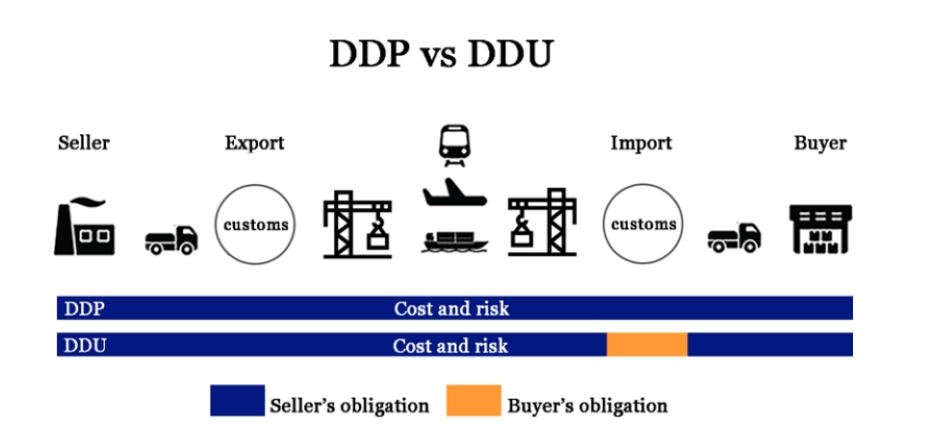
This is a delivery method where the seller assumes the most responsibility. It means the seller transports the goods to the destination and is responsible for all related costs and risks, including transportation costs, insurance, import duties, Value Added Tax (VAT), customs clearance procedures in the destination country, and any other possible expenses. The seller completes the delivery only when the goods are delivered to the location specified by the buyer.
Meaning of DAP (DDU) Trade Terms
The core distinction between DDU (Delivered Duty Unpaid) and DAP (Delivered at Place) lies in the version specifications and the definition of responsibilities regarding customs clearance: DAP officially replaced DDU in the ICC Incoterms® 2010 rules. While the buyer is responsible for paying import duties under both terms, there are differences regarding specific rule provisions and the details of customs clearance risks.
DAP stands for “Delivered At Place”
Compared to DDP, the seller’s responsibility in DAP is slightly less. It means the seller transports the goods to the specified location at the destination, but is not responsible for customs clearance and payment of import duties and other related fees. The buyer is responsible for import customs clearance and payment of duties after the seller delivers the goods.
Basic Characteristics of DDP and DAP
These two methods differ in the allocation of responsibilities and costs between the seller and the buyer.
Key Characteristics of DDP
- Seller’s responsibilities are highly concentrated, and the process is controllable.
- Excellent buyer experience, very low operating costs.
- Requires high compliance capabilities and tax understanding from the seller.
- If tax and fee estimates are incorrect, the seller bears all the risk.
Applicable Scenarios
- Suitable for situations where the seller has strong control and can complete import procedures and pay related fees in the destination country.
- Suitable for buyers who need to simplify the process and are willing to bear higher costs.
DDP shipping Services From China
Key Characteristics of DAP
- Relatively transparent cost structure.
- Lower risk for the seller.
- Suitable for buyers familiar with their country’s import procedures.
- Customs clearance efficiency depends on the buyer’s capabilities.
- Prone to delivery disputes due to tax and fee issues.
Applicable Scenarios
- Suitable for situations where the seller wants to simplify the delivery process but is unwilling to handle import duties and customs clearance.
- DAP is more suitable when the buyer is willing to undertake customs clearance and related costs.
What are the Differences Between DDP and DAP?
Understanding these differences can help avoid hidden costs and customs clearance delays.
| Aspect | DDP (Delivered Duty Paid) | DAP (Delivered at Place) |
|---|---|---|
| Responsibility | Seller handles everything — shipping, customs, duty, and delivery. | Seller covers freight only; buyer must handle customs and pay taxes. |
| Customs Clearance | Handled by the freight forwarder. | Handled by buyer or buyer’s appointed clearing agent. |
| Duties & Taxes | Fully prepaid and included in quote. | Buyer pays upon arrival (often causes delay). |
| Required Import License | Not required | Buyer must have registration and import permit. |
| Delivery Location | To door / warehouse / shop anywhere . | To port or airport only |
| Transparency | All-inclusive quote, no hidden fees. | Extra fees at destination (tax, agent, storage). |
| Recommended For | SMEs, eCommerce importers, new importers. | Experienced importers with local licenses. |
How to Choose Between DDP and DAP Services
Several key factors need to be considered when choosing between different international trade terms. Different customer types and needs will also influence the decision between these two options.
- Does the seller have the capability to handle customs clearance in the destination country?
- Is the seller willing to bear import taxes, duties, and other fees?
- Does the buyer want to simplify the import process and reduce hassle?
- Does the buyer have the resources and capability to handle customs clearance and pay duties?
- Are the customs clearance procedures in the destination country complex?
- Can the seller quickly address potential problems during the import process?
How to Optimize Costs and Timeliness for DDP and DAP
Both parties (seller and buyer) can adopt the following strategies to jointly optimize costs and timeliness:
Choosing appropriate transportation insurance
Whether using DDP or DAP, in cross-border transportation, choosing the right type of insurance (such as all-risk insurance) can ensure that additional costs due to loss or delay are minimized in case of risks during transportation.
Data-driven decision-making
By using supply chain management software or a transportation management system (TMS), the seller can track the status of goods transportation, customs clearance progress, and timeliness in real time, and adjust transportation plans accordingly.
Transparent communication and coordination
The seller and buyer should maintain transparent communication, clearly defining their respective responsibilities and expectations during the transportation process, especially regarding customs clearance, transportation timeliness, and cost sharing.
Understanding the fundamental differences between DDP and DAP and being able to make informed choices based on specific circumstances will help businesses reduce operational risks and improve customer satisfaction.