

China has become Tanzania’s largest trading partner and a major source of investment, primarily through maritime transport. Container shipping is the main service mode in maritime transport. Understanding the transportation costs, operational procedures, and cost influencing factors of 20ft and 40ft containers can help you more accurately control your budget and improve logistics efficiency.
Container Shipping from China to Tanzania
Sea freight has become one of the main modes of cargo transportation between the two countries, offering the lowest cost, large capacity, stable shipping schedules, and moderate transit time. Imports from China mainly include machinery and equipment, electronic products, household goods, and daily consumer goods. Container shipping typically has two main modes:
- Full Container Load (FCL): The entire container is used to load the goods of a single shipper, which can improve transportation efficiency and reduce the transportation cost per item.
- Less than Container Load (LCL): Goods from multiple shippers are combined and loaded into one container. Only the space occupied is charged, but the transportation time may be slower because it needs to wait for other goods to be consolidated and shipped together.
Differences Between LCL and FCL and the Composition of Shipping Costs
Tanzania’s Major Ports
Which ports are the main ports for shipping containers from China to Tanzania?
Dar es Salaam: Tanzania’s most important port and a crucial hub in East Africa. Connecting numerous global destinations, it serves as a vital gateway for Chinese goods entering Tanzania and the wider East African market. A large volume of Chinese-made products, such as electronics, textiles, and machinery, arrive at Dar es Salaam and are then distributed throughout the region.
Tanga: Tanga is also one of Tanzania’s important ports20ft & 40ft Container Shipping Costs from China to Tanzania, handling substantial import and export volumes.
Mtwara: Located in southern Tanzania, Mtwara is an important fishing and trading port.
How to Choose the Right Container Type? 20ft vs 40ft Containers
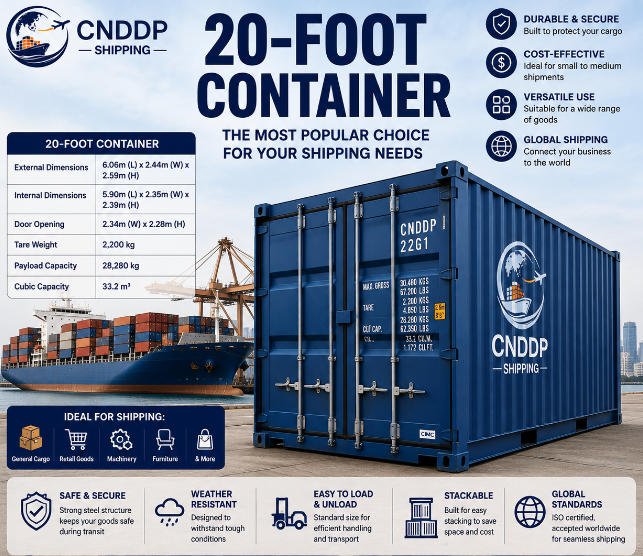
Containers vary in size, capacity, and purpose. Understanding these differences is crucial for choosing the right container for shipping from China to Tanzania. Here are the main differences:
| Features | 20ft Container | 40ft Container | 40HQ Container |
| Size | Length 6.06 meters, Width 2.44 meters, Height 2.59 meters | Length 12.19 meters, Width 2.44 meters, Height 2.59 meters | Length 6.06 meters, Width 2.44 meters, Height 2.81 meters |
| Load Capacity | Approximately 28 tons | Approximately 26 tons | Approximately 26 tons |
| Volume | 33m³ | 67m³ | 76m³ |
| Suitable Goods | Suitable for heavy, small-volume goods | Suitable for most general cargo, suitable for medium to large quantities of goods | Light cargo, bulky cargo, and cargo requiring additional vertical space. |
| Advantage | High load-bearing capacity, low cost, and flexible consolidation. | Low cost per unit voLow unit volume cost, large-volume shipping | Largest volume, more space |
- A 20FT Container typically holds up to 33CBM
- A 40FT Container: 67CBM
- A 40HQ Container: 76CBM
20ft & 40ft Container Shipping Costs from China to Tanzania
| Sea freight service from China to Tanzania | 20ft Container (USD) | 40ft Container (USD) | 40HQ Container (USD) |
|---|---|---|---|
| Shanghai→ Dar es Salaam Port | $2,300 | $2,800 | $3,100 |
| Ningbo→ Dar es Salaam Port | $2,100 | $2,900 | $3,200 |
| Shenzhen→ Dar es Salaam Port | $2,120 | $2,920 | $3,050 |
| Guangzhou→ Dar es Salaam Port | $2,000 | $2,700 | $3,100 |
| Qingdao→ Dar es Salaam Port | $2,400 | $2,800 | $3,050 |
| Tianjin→ Dar es Salaam Port | $2,050 | $2,850 | $3,200 |
Average reference price:
- 20ft container from China to Tanzania: approximately USD 2,000–4,500
- 40ft container from China to Tanzania: approximately USD 2,500–5,500
Additional Costs of Shipping from China to Tanzania
In addition to basic freight, importers must consider various costs involved in container shipping from China to Tanzania. These costs include mandatory and optional charges, which together determine the total shipping cost.
Key cost elements include:
Customs Duties: In Tanzania, most goods are subject to customs duties on a CIF basis, with rates ranging from 0% to 25% (depending on the HS code).
Documentation Fees: Costs for preparing necessary documents such as bills of lading, packing lists, and commercial invoices.
Port Charges: Local loading and unloading costs at the ports of origin and destination.
Insurance: While not mandatory, insurance is strongly recommended to protect against damage or loss of goods.
Inspection and Release: Applicable to certain controlled or regulated items.
Cost of Shipping a 20ft Container from China to Dar es Salaam Port, Tanzania
For high-density, heavy cargo such as machinery or raw materials, a 20-foot container is often the best choice. As of early 2026, the cost of shipping a 20-foot container from China to Tanzania typically ranges from $2,000 to $4,500. Please note that these prices are port-to-port prices and do not include load and unloading charges (THC) at the port of origin or destination.
| 20ft container cost component | Average Cost (USD) |
|---|---|
| Base Shipping Rate | $2,000 – $4,500 |
| Fuel Surcharge | $100 – $200 (Depending on oil price fluctuations) |
| Port Fees | $50 – $150 |
| Customs Duties | $200 – $400 |
| Insurance | $50 – $150 |
Cost of Shipping a 40ft Container from China to Dar es Salaam Port, Netherlands
If you are shipping larger cargo such as furniture, textiles, or electronics, the price per cubic meter of a 40-foot container (or 40HC container) is more advantageous. Currently, the cost of shipping a 40-foot container from China to Tanzania is between $2,500 and $5,500.
| 40ft container cost component | Average Cost (USD) |
|---|---|
| Base Shipping Rate | $2,500 – $5,500 |
| Fuel Surcharge | $100 – $250 (Depending on oil price fluctuations) |
| Port Fees | $100 – $200 |
| Customs Duties | $300 – $500 |
| Insurance | $100 – $200 |
Factors affecting the cost of shipping from China to Tanzania
The cost of shipping containers from China to Tanzania is comprised of several factors:
- Fuel surcharge – Fluctuations in global oil prices directly affect the fuel surcharge adjustment factor (BAF) added to freight rates.
- Seasonal demand – During peak seasons (such as year-end holidays), freight rates rise due to surged demand caused by limited cargo space.
- Peak season surcharges – Additional charges may be levied during peak demand periods, increasing your total shipping costs.
- Container supply – Shortages of empty containers or vessel delays can lead to unexpected increases in freight rates.
- Port congestion – Busy terminals in China or Tanzania may result in demurrage fees or terminal handling charges.
Understanding the composition and influencing factors of these costs helps in better planning logistics costs and transportation processes.
Shipping containers time from China to Tanzania
| Route | Transit Time (Days) |
|---|---|
| Shanghai – Dar es Salaam | 25-35 |
| Shenzhen – Dar es Salaam | 30-40 |
| Ningbo – Dar es Salaam | 28-38 |
Customs Clearance Documents for Tanzania
To ensure smooth customs clearance for shipments from China to Tanzania, the following shipping documents are typically required:
- Commercial Invoice
- Packaging List
- Bill of Lading or Air Waybill
- Certificate of Origin
- Import License (if applicable)
Complete documentation can reduce customs clearance delays and help avoid penalties or storage fees. Working with an experienced freight forwarder ensures that all necessary documents comply with international transport regulations.
Tips for Shipping from China to Tanzania
CNDDP Shipping is a Chinese international freight forwarding company providing integrated logistics services from China to Tanzania and other African countries. For the China-Tanzania route, CNDDP offers complete, one-stop, dedicated logistics services. Here are some cost-saving tips:
Compare different freight forwarding companies.
Different companies offer different pricing models. Multiple quotes will ensure you get the most competitive price.
Book in advance.
Booking in advance helps you avoid peak season surcharges and secure vessel berths.
Optimize container loading.
Consolidating cargo into FCL or LCL reduces wasted space and lowers unit costs.
Choose the appropriate mode of transport.
Weigh cost and speed based on urgency. Options include sea freight, air freight, or multimodal transport.
Bundle additional services.
Many freight forwarding companies offer warehousing, labeling, or cargo tracking services. Bundling these services together can reduce overall costs.