
Efficient and economical cargo transportation has always been a key issue in international logistics. In international logistics, FCL (Full Container Load) and LCL (Less than Container Load) are the two most common methods of sea freight, each with its own advantages and suitable for different types of goods and transportation needs. FCL is more suited to large-scale and stable supply chains, while LCL is more suitable for fragmented and flexible trade models.
What is Less-than-Container Load (LCL) Shipping?
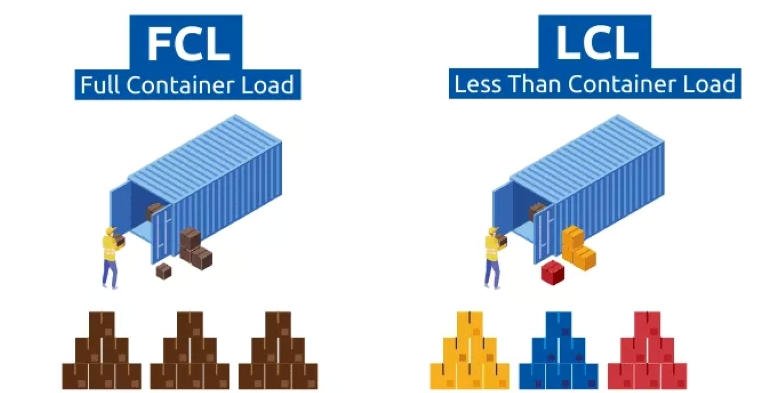
LCL means you only pay for the space your goods actually occupy. Therefore, if you don’t need an entire container, LCL shipping can save you money. It is suitable for transporting small batches of goods consisting of boxes and pallets. Your goods will be consolidated, packaged, and shipped to the destination along with other goods.
Why Choose LCL Shipping?
- High cost-effectiveness for small-batch shipments
- Flexibility to adapt to partial load or multi-city delivery
- Frequent schedules make on-demand transportation more convenient
When is LCL shipping recommended?
- Small or irregular shipment volumes
- Flexible delivery needs
- Multi-destination transportation
- Businesses shipping less than 15 cubic meters or 2-3 pallets
What is Full Container Load (FCL) Shipping?
FCL means all goods will be loaded into one container. This is suitable for transporting large quantities of goods that require more space. The goods are not removed from the container, and the container is sealed and will not be disturbed during transportation.
Why choose FCL shipping?
- Safer, as goods remain sealed throughout the entire transit process.
- Faster and more direct route planning, reducing contact points and avoiding consolidation delays.
- Economical due to economies of scale, resulting in lower unit costs.
When is FCL shipping recommended?
- Large-volume shipments (usually 15 cubic meters or more)
- Sensitive or high-value goods
- If speed is a primary consideration and you need shorter transit times
Depending on the volume of your cargo, FCL shipping can sometimes be more economical even if your cargo does not fill an entire container.
If you are interested in the cost of shipping containers from China to the Middle East, you can read:
- Cost of Shipping 20ft & 40ft Containers from China to Saudi Arabia
- Cost of Shipping 20ft & 40ft Containers from China to Syria
- Cost of shipping 20ft & 40ft containers from China to Iraq
- Cost of shipping 20ft & 40ft containers from China to Kuwait
Main Differences Between LCL and FCL
Understanding these differences is crucial for choosing the most suitable transportation method for your business needs.
| Aspect | LCL (Less than Container Load) | FCL (Full Container Load) |
|---|---|---|
| Shipment Volume | Ideal for smaller shipments like boxes or pallets. | Best for larger shipments that can fill an entire container. |
| Cost | Cheaper for smaller loads because you only pay for the space you use. | More cost-effective for bigger shipments as the container has a flat fee. |
| Time | Takes longer since the container is shared and needs extra processing. | Faster because the container is not shared and goes directly to delivery. |
| Security | Less secure due to more handling and shared space with other shipments. | Offers high security as the container is private and stays sealed. |
How to Choose Between FCL and LCL Shipping Based on Cargo Characteristics
- Situations suitable for FCL (Full Container Load) include: Cargo volume typically exceeding 15–18 cubic meters, high-value goods, fragile or requiring high security, strict delivery time requirements, and long-term, stable, and large-volume shipments.
- Situations suitable for LCL (Less than Container Load) include: Small shipment quantities per consignment, less than the full container capacity, multiple product types, small-batch combined shipments, and relatively flexible delivery time requirements.
Advantages and Disadvantages of FCL and LCL
Main Advantages of Less Than Container Load (LCL) Shipping and the Benefits it Offers:
- High flexibility, suitable for small batches and multiple shipments.
- Low entry barrier, no need to fill a full container to ship.
- Suitable for market testing, reducing the risk of initial trial orders.
- Can flexibly accommodate irregular or smaller sized goods.
- Sharing space with others reduces the environmental impact.
Potential Disadvantages of LCL:
- More steps involved in consolidation and deconsolidation, making the process complex.
- Numerous cost items and many hidden costs.
- Since the container is handled as a whole, the transit time is unstable, and container shipping time may be longer.
- Increased cargo handling time, therefore a higher chance of damage.
- Lower level of privacy due to sharing space with other goods during transportation.
- Lack of flexibility in cargo packaging or handling methods.
Why Full Container Load (FCL) Shipping Might Be a Better Option
- Suitable for transporting heavy, single-piece cargo requiring large space.
- Lower risk of damage due to fewer handling points.
- Safer transportation with cargo individually packed in containers.
- More stable delivery times, as there’s no need to wait for consolidation, and customs clearance and container handling processes are simplified.
- Strong cost control, with a clear overall cost structure, suitable for long-term planning.
- For large volumes of goods, FCL shipping typically results in lower costs per unit.
Challenges of Choosing FCL Shipping
- Requires a high volume of goods; small quantities can lead to wasted space.
- Higher per-shipment cost, requiring greater capital turnover.
- May be difficult for units smaller than the container or irregularly shaped units.
- FCL shipping requires longer lead times for arrangement and planning, as container rental, loading, and transportation need to be prepared in advance.
- Difficult to maintain operations if shipping frequency is low or shipment volume is too small.
FCL and LCL Shipping Cost Components
When choosing between FCL (Full Container Load) and LCL (Less than Container Load) shipping methods, transportation cost is a key factor. The cost structures of the two differ significantly, making understanding these differences crucial for logistics cost control:
FCL Cost Structure
- Basic Ocean Freight: Priced according to container type and shipping route
- Origin Port Charges: Including THC (Terminal Handling Charges), documentation fees, customs clearance fees, etc.
- Destination Port Charges: Unloading fees, port security fees, customs brokerage fees, etc.
- Inland Transportation Costs: Trucking fees from the factory to the port and from the destination port to the warehouse
- Surcharges: Variable fees such as fuel surcharges, currency adjustment factors, peak season surcharges, etc.
- Insurance: Transportation insurance calculated based on the value of the goods
LCL Cost Components
- Volume/Weight Rate: Charged per cubic meter or ton of cargo, using “chargeable tons” as the unit
- Consolidation Service Fee: Including professional services such as cargo consolidation, container loading, and document processing
- Origin Port Handling Charges: CFS handling fees, documentation fees, customs clearance fees, etc.
- Destination Port Deconsolidation Fees: Unloading, sorting, warehousing, etc.
- Minimum Freight Charge: A minimum charge applies even for small shipments
- Various Surcharges: Similar to FCL, but potentially more items due to the complexity of the operation
How to Reduce Risks and Costs in FCL and LCL Shipping
Strategies for FCL:
- Plan container loading efficiently to maximize loading capacity.
- Choose stable shipping routes and long-term partner shipping companies.
- Utilize professional packing and securing services to minimize cargo damage.
Strategies for LCL:
- Choose reputable consolidation agents.
- Obtain a clear fee breakdown to avoid “hidden charges” at the destination port.
- Minimize transshipment ports to reduce the probability of delays.
Why Chinese Freight Forwarders Choose CNDDP
CNDDP Shipping is the ideal choice for those with limited budgets seeking simple and convenient shipping services. We have a strong network of partners, making global shipping from China easy and hassle-free.
Our services cover almost every aspect of shipping. We offer DDP Shipping service and customs clearance at highly competitive prices.
Whether it’s a few items or a large shipment requiring meticulous planning – we guarantee you won’t have to worry about a thing.
Our mission is to provide fast, simple, and affordable shipping services. Simply leave the logistics to us, save time, and focus on achieving your goals.