

Egypt, with its geographical location, is a crucial logistics hub connecting Asia, Africa, and Europe. Sea Freight is one of the most important modes of transportation in international trade, and its advantages of low cost, large capacity, and global coverage make it the preferred choice for cross-border shipping.
Container Shipping from China to Egypt
Shipping containers by sea from China to Egypt is a cornerstone of Egypt’s supply chain, typically taking 20 to 35 days. Successful shipment requires a grasp of shipping methods (FCL vs. LCL), an understanding of the volatile shipping costs expected in 2026, and strict compliance with Egyptian Customs’ Nafeza platform to avoid severe penalties.
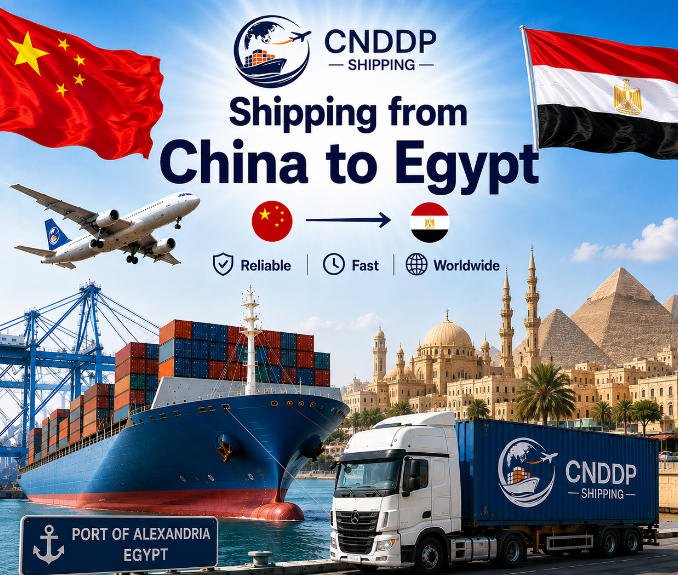
Major Routes and Ports for Container Shipping from China to Egypt
Sea routes from China to Egypt typically cross the Indian Ocean and the Red Sea, pass through the Suez Canal into the Mediterranean Sea, and finally arrive at major Egyptian ports. The average voyage takes approximately 20 to 35 days, depending on the port of departure, the port of destination, and the shipping company’s route arrangements.
Major Destination Ports in Egypt:
- Port Said (East and West Ports): Located at the Mediterranean entrance to the Suez Canal, it is the primary port of call for most ships. Cargo is often transshipped or unloaded directly here.
- Alexandria: Egypt’s main commercial port, handling most of the country’s import and export goods, located on the Mediterranean coast, further west.
- Damieta Port: A specialized container port located between Port Said and Alexandria, renowned for its modern facilities and efficient operations.
- Sokhna Port: Situated on the Red Sea coast, this port is the fastest option for shipments destined for the Greater Cairo region, bypassing the need to transit the Suez Canal.
Key Ports for Shipping from China to the Middle East
Common Container Types and Sizes from China to Egypt
In container shipping, choosing the appropriate container type and size is crucial for both efficiency and cost. Different goods require different types of containers to ensure safe and efficient transport to their destination.
| Container Type | Internal Dimensions | Volume | Maximum Gross Weight | Common Uses |
| 20ft Standard Container | 5.9m × 2.35m × 2.39m | 33 cubic meters | 24,000 kg | Suitable for high-density cargo such as machinery and metal products |
| 40ft Standard Container | 12.03m × 2.35m × 2.39m | 67 cubic meters | 30,480 kg | Suitable for larger cargo such as furniture, home appliances, and light industrial products |
| 40ft High Duty Container | 12.03m × 2.35m × 2.69m | 76 cubic meters | 30,480 kg | Suitable for oversized or large-volume cargo |
A Step-by-Step Guide to Shipping Containers from China to Egypt
Shipping containers from China to Egypt involves six key steps: sourcing goods, obtaining an ACID number, booking freight, managing export customs clearance in China, tracking the sea voyage, handling import customs clearance in Egypt, and final delivery.
To streamline the process, follow this proven roadmap:
- Sourcing and preparing goods: Finalize production with your Chinese supplier and determine the total volume (CBM) and weight.
- Obtaining an ACID number: The Egyptian importer logs into the Nafeza system to apply for an ACID number, while the Chinese supplier registers on the CargoX system.
- Booking freight and export clearance: Choose between Full Container Load (FCL) or Less than Container Load (LCL), book the shipment, and complete export customs formalities in China.
- Sea transport: The vessel departs after the container is loaded, beginning a voyage that typically takes 20–35 days; monitor the vessel’s progress.
- Import customs clearance: Upon arrival in Egypt, a customs broker clears the goods using the pre-submitted Nafeza documentation and pays applicable customs duties and VAT.
- Inland transport: The container is trucked from the port (e.g., Alexandria or Sokhna) to your final warehouse or distribution center.
20ft & 40ft Container Shipping Costs from China to Egypt
Cost of shipping full container loads from China to Egypt: the current cost for a 20-foot container (20GP) ranges from $1,500 to $3,700, while the cost for a 40-foot container (40GP) ranges from $2,000 to $5,050.
Below is a reference range for ocean freight costs between some major Chinese ports and major Egyptian ports. Actual costs may vary depending on the factors mentioned above.
| Port of Loading (China) | Port of Destination (Egypt) | 20ft Container Cost | 40ft Container Cost | 40HC Container Cost |
| Shanghai Port | Alexandria | $1,500 – $3,200 | $2,500 – $4,200 | $3,000 – $4,800 |
| Shenzhen Port | Said | $1,700 – $3,400 | $2,800 – $4,500 | $3,200 – $4,900 |
| Ningbo Port | Alexandria | $1,500 – $3,100 | $2,400 – $4,000 | $3,000 – $5,000 |
| Tianjin Port | Said | $1,600 – $3,300 | $2,600 – $4,300 | $3,300 – $4,950 |
| Qingdao Port | Alexandria | $1,700 – $3,400 | $2,600 – $4,500 | $3,150 – $4,750 |
What costs are involved in container shipping from China to Egypt?
Container shipping costs from China to Egypt typically consist of several components, each of which may vary depending on the type of cargo, the destination port, the shipping line, and current market conditions:
- Ocean Freight: The basic transportation cost from a Chinese port to an Egyptian port.
- Origin Charges: Includes costs for container loading, trucking, customs clearance, and document processing.
- Destination Charges: Includes unloading, port handling fees, and customs clearance fees.
- Battery Surcharge (BAF): Varies based on international oil price fluctuations.
- Terminal & Security Fees: Charged by the port.
- Additional Charges: Such as insurance premiums, demurrage fees, storage fees, or special cargo charges.
You might be interested in: Differences Between LCL and FCL and the Composition of Shipping Costs
Factors Affecting the Cost of Container Shipping from China to Egypt
Many factors influence the cost of ocean freight from China to Egypt. Some are controllable, while others are affected by external market conditions. Understanding these factors can help you optimize your shipping plans and reduce unnecessary expenses.
Transport Distance and Voyage Time
Some routes may involve multiple transshipment ports, leading to longer transit times and potentially additional costs.
Peak and Off-Peak Seasons
Ocean freight prices are typically affected by seasonal demand fluctuations. In international trade, demand usually increases during holidays such as Chinese New Year, Thanksgiving, and Christmas, resulting in higher freight rates.
Fuel Price Fluctuations
Especially when international oil prices fluctuate significantly, shipping companies typically adjust surcharges based on price changes, causing freight rates to fluctuate.
Cargo Type
Different types of cargo require different handling methods. Some cargo may require special containers (such as refrigerated containers or open-top containers), increasing costs.
Port Charges
Different ports may charge different fees. Some ports may have relatively higher loading, unloading, and storage fees, and busy ports usually charge higher port charges.
Port Congestion
If a port experiences congestion due to excessive workload or unforeseen events, ships may need to queue to unload, leading to delays that increase storage costs and other additional expenses.
Transportation Terms (Incoterms)
Trade terms (such as FOB, CIF, etc.) also affect how costs are allocated. Different terms define the responsibilities and cost sharing between the buyer and seller during transportation; understanding and selecting appropriate terms helps reduce transportation costs.
Freight forwarder for shipping containers from China to Egypt
How to Choose A Freight Forwarder
Choosing the right freight forwarder is crucial to ensuring your goods arrive at their destination on time, cost-effectively, and safely. The freight forwarder coordinates the entire transportation process. Here are some key factors to consider when selecting a freight forwarder:
Experience and Qualifications
The company should have a proven track record of handling both Full Container Load (FCL) and Less than Container Load (LCL) shipments from China to Egypt. Valid trade or company patents or logistics licenses are strong evidence of credibility.
Transparent Pricing
Excellent freight forwarders provide detailed quotations, including ocean freight, local handling fees, and final delivery costs, helping you clearly understand the total transportation cost.
Strong Global Network
Freight forwarders with offices or partners in Egypt can efficiently manage import customs clearance and minimize port storage time.
Comprehensive Services
Look for one-stop container shipping services that offer door-to-door transport, air freight, and ocean freight.
Customer Support
Reliable freight forwarders provide proactive tracking, clear updates, and professional communication at every stage of international shipping.
Since 2013, CNDDP Shipping has specialized in cross-border logistics between China and Egypt, offering services such as FCL/LCL sea freight and air freight. Leveraging expert knowledge of customs clearance requirements across Middle Eastern countries, the company helps foreign trade enterprises minimize cross-border shipping risks.
If you are interested in the cost of shipping containers from China to other Middle Eastern countries, you can read:
- Cost of shipping 20ft & 40ft containers from China to Kuwait
- Cost of shipping 20ft & 40ft containers from China to Iraq
- Cost of Shipping 20ft & 40ft Containers from China to Syria
- Cost of Shipping 20ft & 40ft Containers from China to Saudi Arabia
- Cost of Shipping 20ft & 40ft Containers from China to Iran