

Boasting coastlines along both the Red Sea and the Persian Gulf, Saudi Arabia operates ten key commercial and industrial ports that handle the nation’s import-export trade and energy exports. Categorized by cargo throughput, the two major container hubs—Jeddah Islamic Port and King Abdulaziz Port (Dammam)—handle 90% of the country’s imports of general and e-commerce cargo, while the remaining ports focus on the transport of oil, petrochemicals, and industrial bulk and break-bulk cargo.
Comprehensive Ranking Table of Saudi Arabia’s Top 10 Ports
| Rank | Port English Name | Annual Cargo Volume (2024) |
|---|---|---|
| 1 | King Fahad Industrial Port (Yanbu) | 133 million tons |
| 2 | King Fahad Industrial Port (Jubail) | 64 million tons |
| 3 | King Abdulaziz Port (Dammam) | 52 million tons / 3.23M TEU |
| 4 | Jeddah Islamic Port | 47 million tons / 2.08M TEU |
| 5 | Ras Tanura Port | 39 million tons |
| 6 | Jizan Islamic Port | 12.7 million tons |
| 7 | Ras Al-Mishab Port | 7.6 million tons |
| 8 | King Salman Port (Duba) | 4.2 million tons |
| 9 | Al Wajh Port | 2.1 million tons |
| 10 | Umluj Port | 0.9 million tons |
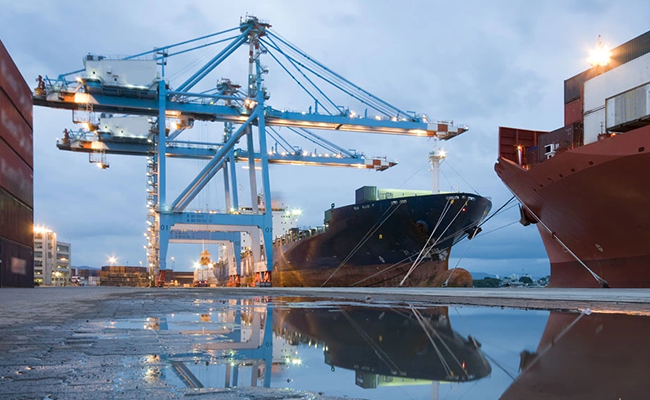
Respecting original content; image source: https://www.basenton.com/a-guide-to-saudi-arabias-11-most-important-ports/
Tier 1: Major Commercial Container Ports
King Abdulaziz Port, Dammam (East Coast – Persian Gulf)
As the largest container port on Saudi Arabia’s Persian Gulf coast, it is connected to the capital, Riyadh, by a direct freight railway, making it the optimal port for discharging cargo destined for Riyadh, the Eastern Industrial Zone, Al Khobar, and other cities. The port features cold-chain storage and large container yards, handling 35% of the country’s imported containerized cargo.
- Advantages: Lower costs for inland rail transshipment; lower risk of congestion compared to Jeddah; faster delivery times for DDP shipments to Riyadh. It is well-suited for shipping large volumes of general trade goods, furniture, auto parts, and home appliances.
Jeddah Islamic Port (West Coast – Red Sea)
Serving as Saudi Arabia’s commercial gateway, this port handles 65% of the country’s imported consumer goods and serves key western cities such as Jeddah, Mecca, and Medina. It boasts frequent direct shipping routes to and from Asia. As a long-established trading hub in the Middle East, it features a mature customs clearance system and standardized inspection procedures for e-commerce goods.
- Disadvantages: Red Sea shipping routes are susceptible to geopolitical factors, causing some carriers to reroute via the Cape of Good Hope; delays while waiting at anchorage are common during peak seasons. Jeddah Islamic Port is the preferred choice for shipments destined for western Saudi Arabia or Amazon Middle East FBA warehouses.
Tier 2: Specialized Industrial Ports for Energy
Yanbu Industrial Port and Jubail Industrial Port: Saudi Arabia’s two major petrochemical export hubs. They rarely handle standard foreign trade containers, serving instead as terminals for oil tankers and break-bulk carriers transporting crude oil, plastics, and chemical raw materials; they are generally not options for standard foreign trade merchants.
Ras Tanura Port: A premier global crude oil export terminal. It handles over 90% of Saudi Arabia’s crude oil exports but lacks container handling facilities, serving energy companies exclusively.
Tier 3: Small-to-Medium Regional Ports
Ports such as Jazan, Ras Al-Mishab, and Duba have low throughput and limited shipping routes. They are utilized primarily for local small-scale trade and the transport of scattered materials for engineering projects, but are rarely ports of call for standard foreign trade shipments.
Shipping costs from China to Saudi Arabia (Jeddah and Dammam ports)
Reference Rates for FCL (Full Container Load) Sea Freight
| Loading Port | POD Port | 20GP Price | 40HQ Price | Sea Transit Time |
|---|---|---|---|---|
| Shenzhen | Jeddah | 1600~2900 USD | 2000~3650 USD | 16~22 days |
| Ningbo | Dammam | 1650~2950 USD | 2050~3700 USD | 18~24 days |
| Shanghai | Jeddah | 1700~3000 USD | 2100~3750 USD | 17~23 days |
Learn more: Cost of Shipping 20ft & 40ft Containers from China to Saudi Arabia
LCL (Less than Container Load) Rates
LCL shipping from various Chinese ports to Jeddah and Dammam: $45–$72 per CBM (minimum chargeable volume: 1 CBM); suitable for cross-border sellers restocking in small quantities.
Note: The rates above cover only the basic ocean freight and exclude destination terminal handling charges and customs duties. By selecting the all-inclusive DDP service, you can settle customs duties, clearance fees, and last-mile delivery costs in a single payment, with no hidden charges.
CNDDP Shipping specializes in dedicated sea freight routes to Saudi Arabia. Leveraging departures from major Chinese ports—including Shanghai, Ningbo, Shenzhen, and Qingdao—we connect to all Saudi ports and offer FCL (Full Container Load), LCL (Less than Container Load), and nationwide DDP (Delivered Duty Paid) door-to-door services (including customs clearance and tax coverage), catering to the shipping needs of export manufacturers, Amazon Middle East sellers, and project traders.
How to choose the right Saudi destination port based on cargo type? A practical guide to port selection
For cargo destined for Riyadh or industrial zones in Eastern Saudi Arabia: Prioritize the Port of Dammam; rail connections to the interior offer better overall logistics efficiency and more cost-effective inland freight rates.
For cargo bound for Jeddah, Mecca, Medina, or FBA warehouses in Western Saudi Arabia: Select Jeddah Islamic Port; this eliminates the need for long-distance inland transshipment and ensures faster last-mile delivery.
For oversized cargo such as oilfield equipment, heavy construction machinery, or factory production lines: Utilize break-bulk and general cargo shipping routes serving the industrial ports of Jubail or Yanbu.
For small e-commerce parcels destined for Amazon’s Middle East marketplaces: The combination of LCL (Less than Container Load) shipping to Jeddah and DDP (Delivered Duty Paid) delivery offers the best cost-performance ratio.
For urgent restocking shipments: Prioritize routes to Dammam regardless of whether the final destination is in the east or west; the port experiences less congestion and carries a lower overall risk of delays.
You might be interested in: Key Ports for Shipping from China to the Middle East
Key Tips for Avoiding Pitfalls When Shipping to Saudi Ports
During the peak seasons of Ramadan and Hajj, congestion at Jeddah Port intensifies and customs inspection times slow down; it is advisable to book space and prepare cargo 10–15 days in advance.
Vessels on Red Sea routes may occasionally divert via the Cape of Good Hope, extending transit times by 7–12 days; please factor in a buffer period when planning your inventory and shipments.
Saudi Arabia utilizes the FASAH single-window customs clearance system, requiring absolute consistency in documentation details; under DDP terms, freight forwarders can handle all clearance documentation, thereby reducing the risk of cargo being detained for inspection.
The industrial ports of Yanbu and Jubail do not accept general containerized cargo; do not book shipments calling at these ports to avoid the risk of being unable to unload and incurring demurrage charges.
Summary:
Saudi Arabia’s foreign trade container operations are concentrated at two major ports—Jeddah Islamic Port and King Abdulaziz Port in Dammam—while other ports primarily handle energy shipments.
Routing shipments to Jeddah for western Saudi Arabia, and to Dammam for the capital (Riyadh) and the eastern region, represents the most efficient logistics strategy for foreign trade exports. For cross-border sellers and manufacturers looking to bypass complex customs clearance procedures and avoid the hassle of paying import duties directly, the DDP (Delivered Duty Paid) sea freight model is the preferred choice.