

As one of the economic centers of the Middle East, Saudi Arabia experiences a continuous rise in demand for Chinese-made goods. For businesses, suppliers, and importers looking to understand shipping times from China to Saudi Arabia, clear information on transit times will help them make more informed decisions, optimize procurement and inventory management, and improve overall operational efficiency. This article will detail the transit times between the two countries.
Shipping from China to Saudi Arabia
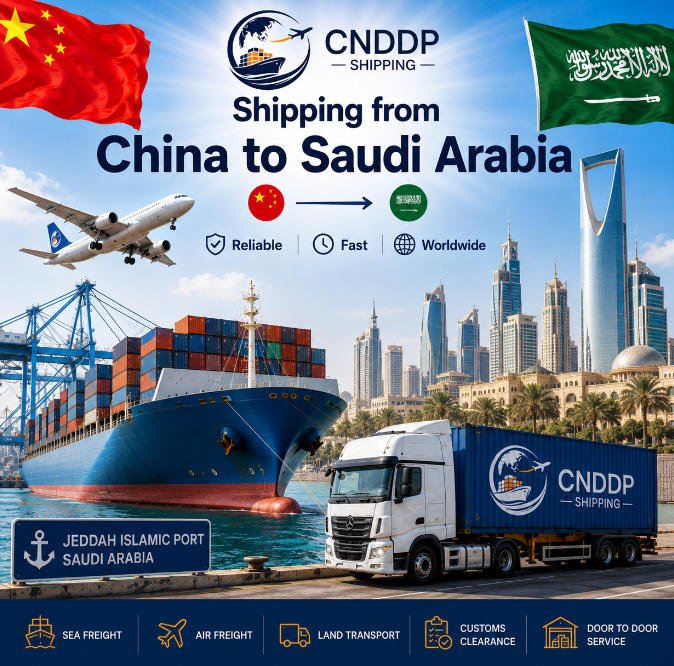
The main modes of transportation from China to Saudi Arabia include sea freight and air freight. The choice of each mode depends on specific needs, including the type of goods, the urgency of the shipment, cost budget, and transportation security.
Sea Freight
Sea freight is the most cost-effective option for transporting large quantities of goods. It is low-cost and suitable for transporting various types of goods, including excavator ,heavy machinery and bulk raw materials. The shipping network is extensive, shipping routes are well-established, and flights are frequent and stable, making it suitable for large-scale procurement.
Air Freight
Air freight is the fastest international transportation method. Goods transported by air are subject to strict control and monitoring, offering high security and fast customs clearance. It is suitable for valuables, perishable goods, or goods requiring rapid delivery; air freight is the best choice.
DDP Shipping
DDP shipping from China to Saudi Arabia can be a powerful solution for importers seeking more comprehensive freight services, including pick-up in China, export customs declaration, international freight, Saudi customs clearance coordination, handling of applicable tariffs and VAT, and final delivery to the confirmed destination.
Major Ports and Airports in Saudi Arabia
As a major economy in the Middle East, Saudi Arabia relies heavily on its ports and airports:
Major Ports
- Jeddah Port: As Saudi Arabia’s main port, it handles a large volume of container ships and boasts highly modern facilities capable of handling various types of cargo.
- Dammam Port: Equipped with advanced container handling facilities, it primarily handles the import and export of Saudi oil and energy products.
Ranking of Saudi Arabia’s Top 10 Ports
Major Airports
- Jeddah Airport: One of Saudi Arabia’s major international airports, it offers frequent routes and comprehensive cargo facilities, capable of handling large volumes of air cargo.
- Riyadh Airport: Features advanced cargo facilities capable of handling various types of cargo.
- Dammam Airport: Equipped with modern cargo facilities, it can handle a wide range of goods, especially energy products and industrial machinery.
Shipping Time from China to Saudi Arabia
| Shipping Mode | Average Transit Time | Recommended For | Example Route |
|---|---|---|---|
| FCL Sea Freight | 20 – 30 days | Bulk or full-container cargo | Shanghai → Jeddah |
| LCL Sea Freight | 22 – 38 days | Small shipments, shared containers | Ningbo → Dammam |
| Air Freight | 3 – 8 days | Urgent goods, electronics | Guangzhou → Riyadh |
| DDP Air Freight | 6 – 10 days | Door-to-door e-commerce goods | Shenzhen → Riyadh |
| Express Courier (DHL / FedEx / UPS / Aramex) | 2 – 5 days | Samples, documents | Hong Kong → Jeddah |
Sea Freight Time from China to Saudi Arabia
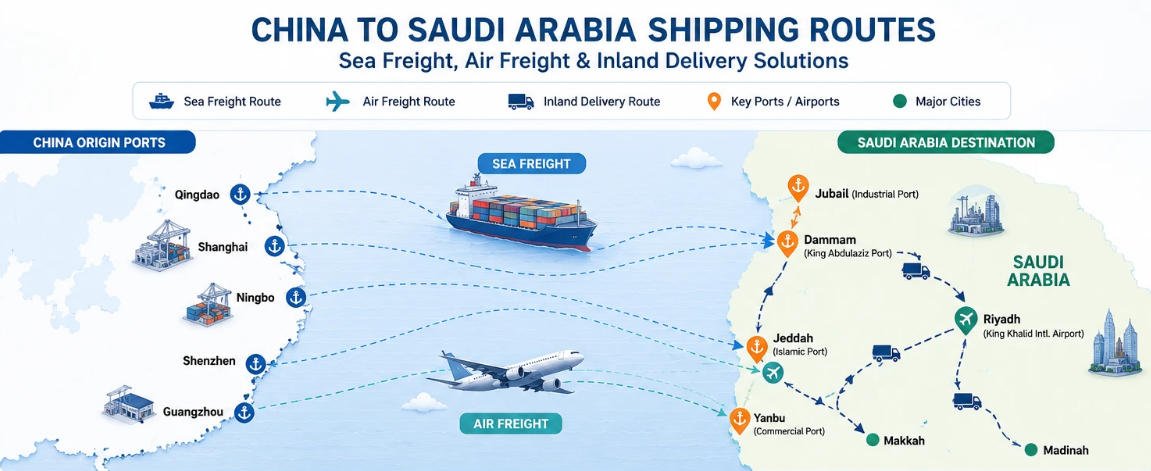
Sea freight from major Chinese ports (such as Shanghai, Shenzhen, and Ningbo) to Jeddah or Dammam ports in Saudi Arabia typically takes 20-35 days. The exact time depends on whether the shipping route is direct.
| Chinese Port | Saudi Port | FCL Time | LCL Time |
|---|---|---|---|
| Shanghai | Jeddah Port | 20–28 days | 25–32 days |
| Shenzhen | Dammam Port | 22–30 days | 27–35 days |
| Qingdao | Jeddah Port | 23–31 days | 25–32 days |
| Ningbo | Jeddah Port | 24–33 days | 28–38 day |
Air Freight Time from China to Saudi Arabia
Air freight is the fastest mode of transport; shipments from major Chinese airports to Saudi airports usually take 3-8 days.
| Departure Airport (China) | Arrival Airport (Saudi Arabia) | Estimated Transit Time |
|---|---|---|
| Guangzhou(CAN) | Jeddah Airport | 5–7 days |
| Shanghai(PVG) | Riyadh Airport | 3–6 days |
| Beijing(PEK) | Dammam Airport | 5–8 days |
| Shenzhen(SZX) | Jeddah AirPort | 3–8 days |
Factors Affecting Shipping Time from China to Saudi Arabia
Shipping time from China to Saudi Arabia is affected by several factors. Understanding these factors can help businesses, suppliers, and logistics managers better predict and manage shipping times:
Port Congestion
Peak seasons (such as holiday shopping seasons) can lead to port congestion, causing delays for ships or cargo due to queues.
Weather Impact
Severe weather (such as typhoons, sandstorms, heavy rain, etc.) can cause delays in shipping or air freight.
Customs Clearance Time
Customs clearance efficiency varies between ports. Customs processing times, inspection procedures, and traffic volume in both China and Saudi Arabia all affect the speed at which goods clear customs.
Cargo Type
Goods with special requirements may require additional processing and transportation time, affecting overall delivery time.
Distance Between Ports
The distance between different ports, resulting in different shipping times.
How to Save Time Shipping from China to Saudi Arabia
Saving shipping time from China to Saudi Arabia improves logistics efficiency:
Choose direct routes or shipping lines
Optimizing the shipping route can significantly reduce transit time. Avoiding stops or detours can speed up the process.
Prepare all documents in advance
Ensure all customs and shipping documents are prepared in advance. Complete documentation can reduce customs clearance time by 2-5 days. These include:
- Commercial invoice
- Packing list
- SASO/SABER certification
- Certificate of Origin (COO)
Avoid peak holiday periods
Avoid scheduling shipments around holidays such as Chinese New Year, Christmas, and peak shipping seasons.
Partner with experienced logistics companies
Professional agents are familiar with Saudi customs policies and can efficiently handle unexpected issues.
Schedule loading and unloading times in advance
Confirm loading and unloading arrangements with ports and airlines in advance to avoid queuing during peak or busy periods.
How Much does it Cost to Ship from China to Saudi Arabia
| Shipping Mode | Specification | Reference Cost (USD) |
|---|---|---|
| Sea FCL | 20GP | 1000‑3000 |
| Sea FCL | 40HQ | 1400‑4500 |
| Sea LCL | Per CBM | 65‑180 |
| Air Freight | Over 100KG (Per KG) | 3‑9 |
| DDP and Door‑to‑Door | Including customs duty & VAT | DDP Air Freight: 4.5‑10 DDP Sea Freight: 100‑250 |
Cost of Shipping 20ft & 40ft Containers from China to Saudi Arabia
How to Choose the Best Option from China to Saudi Arabia?
When choosing a shipping method from China to Saudi Arabia, businesses and individuals need to consider various factors to select the most suitable option, which can help optimize the supply chain and improve operational efficiency:
Transportation Time Requirements
Clearly define the time requirements for your goods. Different shipping methods have different time constraints:
- Goods requiring urgent delivery:If your goods need to arrive in Saudi Arabia as quickly as possible, air freight is undoubtedly the most suitable choice.
- Goods not urgent: Suitable for bulk goods or low-value items if there is relatively ample timeframe.
Cargo Type and Weight
Different shipping methods are suited to different types of goods:
- Heavy, bulk commodities: For bulk commodities, sea freight is the most cost-effective option. Sea freight has a large carrying capacity and is suitable for large quantities and heavy goods.
- High-value or perishable goods: If your goods are valuable, perishable, or have extremely stringent time requirements, air freight offers the safest and fastest shipping method.
Transportation Cost Budget
Transportation cost is usually one of the most important considerations when choosing a shipping method.
- Air Freight:Although air freight is fast, it is usually more expensive and suitable for transporting high-value, urgently needed goods.
- Ocean Freight: Ocean freight is the most economical option for transporting large quantities of goods, especially when the volume is large and time is not urgent.
Cargo Security and Damage Risk
For particularly valuable or fragile goods, cargo security is a crucial factor.
- Air Freight: Cargo transported by air is subject to strict control and monitoring, offering high security, especially suitable for valuable or perishable goods.
- Sea Freight: Sea freight offers good security, but due to longer transit times, goods may be exposed to adverse environmental conditions such as humidity and high temperatures. Improper packaging can also lead to damage.
Predictability and Customs Clearance Issues
Different modes of transport may face different customs clearance and delay issues.
- Air Freight: Air freight typically faces fewer customs clearance issues, and flight schedules are relatively fixed, making it more predictable.
- Sea Freight: Sea freight may face longer customs clearance and loading/unloading times, especially during peak seasons or port congestion, which can cause delays.
You might be interested in:
- Ranking of Saudi Arabia’s Imports from China
- Customs Clearance Procedures for Goods Imported into Saudi Arabia
How to track a shipment from China to Saudi Arabia
Different shipping methods correspond to different tracking methods:
- Sea Freight Tracking: Enter the Bill of Lading (B/L) number and container number on the shipping company’s website to view departure time, arrival time, and route location.
- Air Freight Tracking: Enter the Air Waybill (AWB) number on the airline’s website to view flight departure time and arrival time.
- International Express Tracking: Real-time tracking of shipping status is available, including DHL, UPS, FedEx, and Aramex, supporting full-process tracking (pickup → departure → customs clearance → delivery).
- Freight Forwarding Platform Tracking: Provides WeChat tracking, online tracking via logistics systems, and automatic push updates for businesses to easily understand the logistics status.