

In international trade, Incoterms (International Commercial Terms) determine the price structure, risk allocation, liability boundaries, and logistics arrangements. Among these, CIF (Cost, Insurance, and Freight) is one of the most common and easily misunderstood trade terms. This article will provide a detailed explanation of CIF to help import and export companies make more informed decisions in the complex international logistics environment.
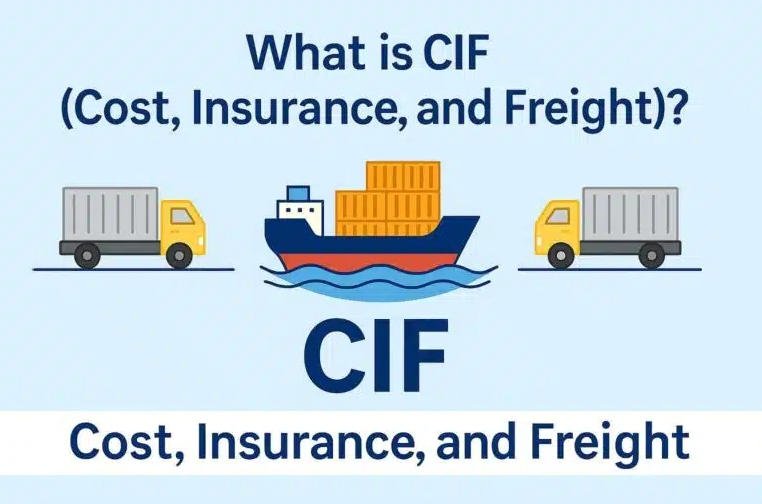
What is CIF: Definition of Cost, Insurance, and Freight
CIF (Cost, Insurance, and Freight) is one of the most commonly used trade terms in international trade. It ensures that the seller bears the cost, insurance, and freight for the buyer’s ordered goods during water, sea, or ocean transportation. The risk of loss or damage to the goods transfers from the seller to the buyer after the goods are loaded onto the ship. However, the seller remains responsible for paying the insurance and freight costs.
27-second video explaining CIF
How is the CIF Cost Calculated?
In international trade, the calculation of CIF (Cost, Insurance, and Freight) prices involves multiple cost components. This will help you better understand how to calculate CIF prices:
Basic Formula for CIF Price
CIF Price = Cost of Goods + Freight + Insurance
- Cost of Goods: This is the cost incurred by the seller to produce, purchase, or prepare the goods. This usually includes manufacturing costs, procurement costs, packaging costs, etc.
- Freight: This is the cost of transporting the goods to the destination port. It is usually chosen and paid by the seller to the shipping company, and the specific cost depends on factors such as the distance of transportation, weight, volume, and mode of transport.
- Insurance: The seller needs to insure the goods to cover risks during transportation (such as loss, damage, etc.). Insurance costs are usually calculated based on the value of the goods (cost of goods).
For example, if the cost of goods is $20,000, the insurance premium is $1,000, and the freight is $2,000, then the total CIF price is $23,500.
Here are the specific steps for calculating the CIF price:
Determine the Cost of Goods
The cost of goods is the basic cost of the goods sold by the seller, including: purchase price of the goods, packaging costs, loading and unloading costs.
Determine the Freight Cost
Freight is the cost of transporting the goods from the seller’s country to the destination port. This includes the following costs: sea freight (or other transportation costs, such as air freight, rail freight), port charges, and transportation agent fees.
Freight Calculation
Freight is usually determined by the seller based on the shipping company chosen in the contract. You can obtain the specific transportation costs by negotiating with a freight forwarder or carrier.
Determine the Insurance Cost
Insurance cost is the cost of insurance purchased by the seller to ensure compensation in case the goods are damaged or lost during transportation. Insurance costs are generally calculated as a certain percentage of the cost of goods (usually 1.1% to 2.5%), but the specific percentage depends on the insurance company and the type of insurance chosen.
By adding all the above costs together, you can get the CIF price. It is also affected by the following factors:
- Port charges: The cost standards may differ in different countries and ports, and the seller needs to calculate the costs to the specific destination port.
- Type of insurance: The type and scope of insurance may also affect insurance costs. The seller can choose comprehensive insurance (all-risk insurance) or other types of transportation insurance.
Advantages of Using CIF Trade Terms
CIF offers key advantages to both buyers and sellers. By clearly defining responsibilities for transportation, insurance, and freight, CIF simplifies the shipping process and reduces risks. This arrangement brings numerous benefits to both parties:
Buyer Benefits
- Simplified Logistics: The seller is responsible for transportation, insurance, and freight to the destination port, reducing the buyer’s involvement in logistics.
- Insurance Coverage: The seller insures the goods during transit, protecting the buyer from the risk of loss or damage.
- Reduced Risk: While the risk transfers after the goods are loaded onto the ship, the seller’s insurance minimizes the buyer’s risk.
- Price Transparency: Buyers have a clear understanding of the total cost, including freight and insurance, with no hidden fees.
Seller Benefits
- Simplified Process: The seller handles all logistics, simplifying the export process for both parties.
- Competitive Advantage: Sellers using CIF terms can assume responsibility for transportation, insurance, and freight to the destination port, making their offers more attractive to international buyers.
- Fixed Costs: Sellers know all transportation and insurance costs in advance, which aids in pricing and profit margins.
- Simplified Payment: The seller is responsible for all costs, reducing potential payment delays related to shipping or insurance.
Documents Required for CIF Shipping
To effectively manage CIF cargo shipments, having complete documentation is crucial. These documents not only facilitate smooth customs clearance but also ensure that the goods are properly tracked and protected throughout the entire transportation process.
- Commercial Invoice: This invoice details the goods, their value, and the terms of sale. It is used for customs clearance and duty assessment.
- Bill of Lading: This is the contract with the carrier. The buyer needs the bill of lading to take possession of the goods.
- Insurance Certificate: This proves that the goods are insured during transit as required by CIF terms.
- Packing List: This details the packaging of the goods for customs and inventory management purposes.
- Certificate of Origin: This proves the country of origin of the goods and is usually a necessary document for customs declaration.
- Export License (if applicable): An export license is required for goods that are restricted from export or require government authorization for export.
- Customs Declaration Form: Submitted to customs upon arrival of the goods, providing detailed information about the goods for customs clearance (usually the buyer’s responsibility).
Differences between CIF and Other Trade Terms
In international trade, CIF (Cost, Insurance, and Freight) is a common trade term, but it has significant differences from other commonly used trade terms (such as FOB, CFR, EXW, etc.).
| Project | CIF | FOB | CFR | EXW |
| Division of responsibilities | The seller bears the transportation costs, insurance fees, and freight charges until the goods are delivered to the designated port. | The seller bears the costs until the goods are delivered onto the ship, and the buyer is responsible for all costs from that point onward. | The seller is not responsible for insurance; only transportation costs are included. | The seller only provides the goods; the buyer assumes all costs and risks from the seller’s location to the destination. |
| Cost sharing | The seller is responsible for The seller bears the transportation costs (including insurance fees). | The seller does not bear the transportation costs; the buyer is responsible for all costs from the port onwards. | The seller bears the transportation costs, but not the insurance fees. | The buyer is responsible for all transportation costs. |
| Risk transfer point | The seller bears the risk until the goods are loaded onto the ship and transportation is completed. | The risk transfers from the seller to the buyer when the goods are loaded onto the ship. | The risk transfers to the buyer after the goods are loaded onto the ship. | The risk transfers immediately after the goods are delivered to the buyer. |
| Scope of application | Suitable for Sea Freight, inland waterway transport, etc. | Suitable for Sea Freight | Suitable for Sea Freight | Applicable to all modes of transport. |
How to calculate CIF price based on FOB price?
Free on Board (FOB) is another commonly used term in international trade. The difference between FOB and CIF (Cost, Insurance and Freight) is that the buyer assumes responsibility for the goods after shipment. To calculate CIF price based on FOB price, you need to add insurance and freight to the FOB price: CIF Price = FOB Price + Insurance + Freight
For example, if the FOB price is $9,000, the insurance is $1,000, and the freight is $2,500, then the CIF price would be: CIF Price = $9,000 + $1,000 + $2,500 = $12,500
Understanding CIF Value in Customs
When importing goods, customs authorities typically use the CIF (Cost, Insurance, and Freight) price to determine the import duties and taxes you need to pay. The CIF price is used because it represents the total cost of the goods arriving at the port of destination. For example, if the import duty is 5% of the CIF price, and the CIF price is $13,500, then the duty is: Import Duty = 5% of $13,500 = $675.
How to Calculate Export Prices Using CIF
For example, if the cost of the goods is $15,000, insurance is $1,500, and freight is $3,000, then the CIF export price is: CIF Export Price = $15,000 + $1,500 + $3,000 = $19,500
CIF is a traditional trade model that balances operational convenience with risk sharing. This article will help you understand the boundaries, risk transfer points, and insurance limitations of CIF, enabling you to make informed decisions based on your own supply chain capabilities.
CNDDP Shipping is a freight forwarding company in China that specializes in DDP (Delivered Duty Paid) shipping services from China to other countries, providing DDP (Delivered Duty Paid) sea and air freight services.